
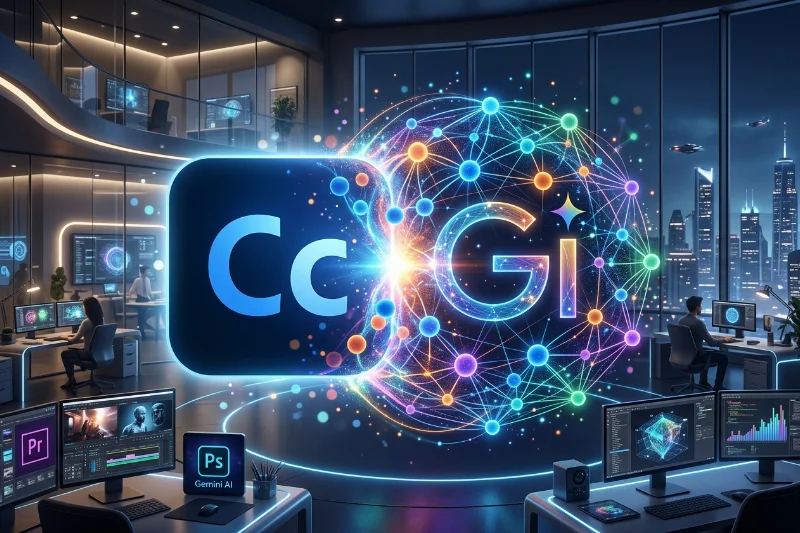
The creative landscape is witnessing a seismic shift as Adobe announces its intention to integrate Google Gemini’s advanced AI capabilities directly into the Creative Cloud suite. This strategic partnership aims to bridge the gap between generative AI and professional design tools, offering users a more seamless and intuitive creative process. By leveraging Google’s powerful multimodal models, Adobe is positioning itself at the forefront of the AI-driven creative revolution.
The Evolution of Adobe Firefly and Generative AI
Adobe has already made significant strides with its proprietary AI model, Firefly, which has been integrated into flagship applications like Photoshop and Illustrator. Firefly focuses on creator-centric features, ensuring that AI-generated content is safe for commercial use. However, the addition of Gemini signifies a move toward a more diverse ecosystem where creators can choose the best tool for their specific needs.
Integrating third-party models like Gemini allows Adobe to provide specialized functionalities that might exceed the current reach of Firefly alone. This collaboration is part of a broader strategy to transform Creative Cloud into a comprehensive hub for AI-assisted design, where the focus remains on enhancing human creativity rather than replacing it.
Deep Integration with Google Gemini
The integration with Google Gemini is expected to bring sophisticated multimodal capabilities to the Adobe ecosystem. This means that Creative Cloud tools will be able to process and understand text, images, and video simultaneously, allowing for more complex and context-aware design suggestions. Whether it’s generating a high-fidelity image from a simple text prompt or automating tedious editing tasks, the synergy between Gemini and Adobe is set to be transformative.
Enhancing Workflow with Multimodal Capabilities
One of the key benefits of this partnership is the potential for significant time savings. By using Gemini’s ability to understand natural language and visual context, designers can execute complex commands that previously required manual labor. For instance, a video editor in Premiere Pro could use Gemini to identify specific scenes or generate b-roll footage that matches the tone and color palette of their project instantly.
Furthermore, the integration promises to improve the precision of generative tools within Photoshop. While Firefly is excellent for textures and patterns, Gemini’s reasoning capabilities can assist in complex compositing tasks, ensuring that light, shadow, and perspective are perfectly aligned when adding new elements to an image. This level of technical sophistication will empower even novice users to achieve professional-grade results.
The Long-term Impact on the Creative Industry
As Adobe opens its doors to external models like Google Gemini, it sets a precedent for interoperability in the tech industry. This move suggests a future where software ecosystems are no longer walled gardens but interconnected platforms that prioritize user efficiency. For professional creators, this means access to a wider palette of AI tools without having to leave their preferred software environment, maintaining a streamlined workflow.
In conclusion, the connection between Adobe Creative Cloud and Google Gemini marks a significant milestone in the evolution of digital artistry. By combining Adobe’s industry-standard tools with Google’s cutting-edge AI research, the creative community is poised to enter a new era of productivity and innovation. As these features roll out, the primary focus will remain on how these tools can amplify human ingenuity in an increasingly digital world.