
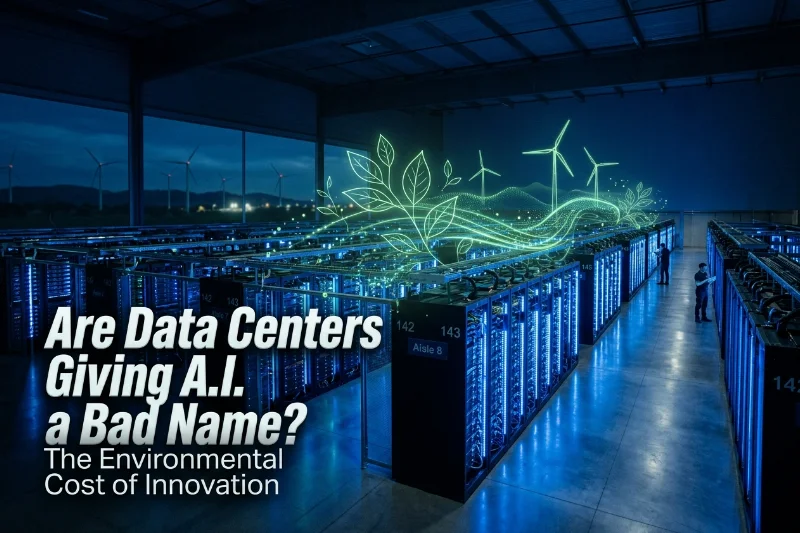
Artificial intelligence is often framed as an ethereal concept—a cloud-based intelligence that exists without physical consequence. However, the reality is far more industrial. Behind every generative prompt and every sophisticated algorithm lies a massive network of data centers, humming with high-performance GPUs and cooling systems. As the demand for AI grows, so does the scrutiny of its physical footprint, leading many to ask if the infrastructure supporting the digital revolution is starting to tarnish its reputation.
The Invisible Burden of the Digital Cloud
While the benefits of AI are visible in everything from medical breakthroughs to creative automation, the environmental costs remain largely hidden from the end-user. Data centers are the backbone of this technology, but they are also energy-intensive hubs that consume vast amounts of electricity. This immense power consumption has sparked a debate about whether the rapid rollout of AI is compatible with global sustainability goals, or if the technology is simply a new form of industrial pollution.
The Energy-Hungry Nature of Neural Networks
Training a single large language model requires millions of compute hours, often drawing power from grids that still rely heavily on fossil fuels. This massive energy appetite has put tech giants in a difficult position, as they strive to balance their “net zero” promises with the competitive pressure to launch increasingly complex models. For many environmental advocates, the sheer scale of energy required to generate a simple image or text response seems disproportionate to the value produced, creating a perception of AI as a resource hog.
A Thirsty Industry: The Water Footprint
Beyond electricity, data centers require significant amounts of water for cooling to prevent hardware from overheating. In regions already facing water scarcity, the sight of a massive server farm siphoning millions of gallons of water can be a flashpoint for local resentment. This localized impact is a major reason why AI is starting to get a “bad name” in communities that see little direct benefit from the technology while bearing the brunt of its resource consumption.
Public Perception and Local Resistance
The physical expansion of data centers has led to a rise in “Not In My Backyard” (NIMBY) sentiment. Large-scale developments often face legal challenges and public protests due to their impact on local power grids and the noise pollution generated by industrial cooling fans. When people see their utility bills rising or their local resources diverted to power a remote algorithm, the abstract wonder of AI quickly turns into tangible frustration, painting the industry as an unwelcome neighbor.
Infrastructure Strain and the Social Cost
The strain on public infrastructure extends beyond just resources; it challenges the social contract between tech companies and the public. As data centers occupy vast tracts of land and require specialized power lines, they often outpace the development of local residential infrastructure. This disconnect creates a narrative where the needs of the machine are prioritized over the needs of the citizen, further damaging the reputation of the AI sector as a whole.
Can Innovation Solve the Reputation Problem?
To combat this growing negative perception, the industry is racing toward greener architectures, such as liquid cooling and waste heat recovery systems. By repurposing the heat generated by servers to warm nearby homes or industrial processes, data centers can transition from being resource drains to being productive members of a circular economy. These innovations are critical not just for efficiency, but for proving that AI can be a responsible and sustainable technological evolution.
Ultimately, whether data centers continue to give AI a bad name depends on the industry’s transparency and its willingness to innovate beyond the algorithm. If tech leaders can align the growth of artificial intelligence with the preservation of natural resources, they can shift the narrative from one of exploitation to one of harmony. The path forward requires a shift in focus: from building the biggest models possible to building the most efficient ones, ensuring that the future of intelligence doesn’t come at the expense of the planet.