
Introduction: The Origins of Intimate Apparel
The history of lingerie is far more than a timeline of fashion; it is a mirror reflecting the changing societal roles and expectations of women throughout the ages. In ancient civilizations like Egypt and Greece, lingerie was primarily functional, consisting of simple linen shifts or wraps designed for modesty and protection against the elements. These early garments laid the foundation for what would become an intricate industry dedicated to both form and function.
The Renaissance and the Rise of the Corset
As we moved into the Renaissance, the focus shifted toward shaping the female silhouette to meet the rigid aesthetic standards of the time. This era saw the introduction of the corset, a garment reinforced with whalebone or wood that aimed to create an upright, conical torso. While often criticized today for its restrictive nature, the corset was considered an essential piece of engineering that supported the heavy fabrics of outer gowns and signaled social status.
The Victorian Era: Complexity and Constraint
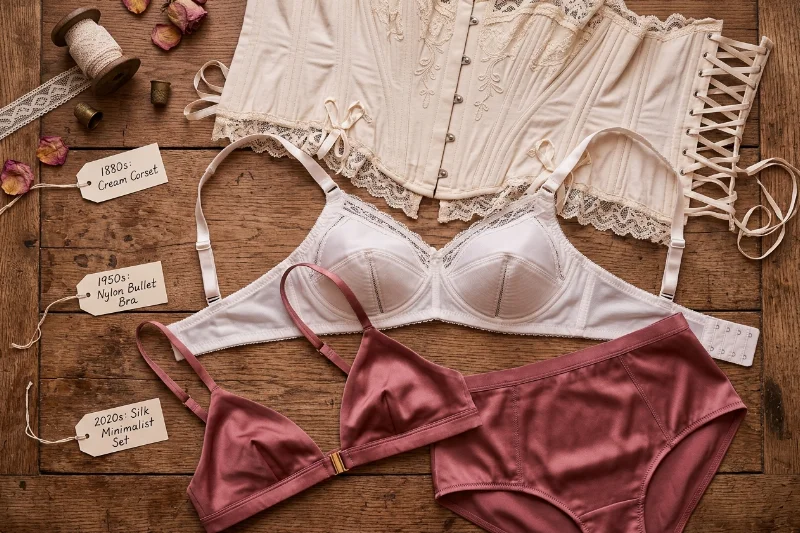
During the Victorian era, lingerie became increasingly complex and layered. A woman’s undergarments could include a chemise, drawers, a corset, a corset cover, and multiple petticoats. This period emphasized the hourglass figure, leading to tighter lacing and the development of the crinoline. It was a time when modesty was paramount, yet the craftsmanship of these hidden layers reached new heights of decorative detail with lace and embroidery.
The 1920s: A Revolution in Freedom
The dawn of the 20th century brought a radical shift in lingerie design, paralleling the rise of the women’s suffrage movement. In the 1920s, the restrictive corset was largely abandoned in favor of the bandeau and the “flapper” silhouette, which emphasized a flatter chest and more boyish frame. This era prioritized movement and liberation, allowing women to dance the Charleston without the physical constraints of previous decades.
The Mid-Century: Glamour and Innovation
By the 1940s and 50s, the introduction of synthetic fibers like nylon and Lycra revolutionized the industry. Lingerie took on a new sense of glamour, influenced heavily by the pin-up culture and the “New Look” pioneered by Christian Dior. The conical “bullet bra” became an iconic symbol of this era, emphasizing a sharp, structured silhouette that defined mid-century femininity and the golden age of Hollywood cinema.
The 1960s and 70s saw another wave of change as the feminist movement challenged traditional beauty standards. Some women chose to discard bras entirely as a symbol of protest, while others embraced the “No Bra” bra designed by Rudi Gernreich, which offered a natural shape without underwires. This period was marked by a push for comfort and a rejection of the highly structured garments that had dominated the previous decade.
The 1980s: Power Dressing and Luxury
In the 1980s, lingerie moved from the bedroom to the boardroom as “underwear as outerwear” became a mainstream fashion trend. Icons like Madonna popularized the wearing of bustiers and lace slips in public. This decade also saw the rise of high-end luxury brands that treated lingerie as a high-fashion accessory, blending athleticism with eroticism and using bold colors and intricate patterns to make a statement of power.
The turn of the millennium brought a focus on “nude” tones and the rise of the seamless T-shirt bra, catering to a desire for invisibility under clothing. However, the late 2010s sparked a movement toward inclusivity and body positivity. Brands began to expand their size ranges and use diverse models, acknowledging that lingerie should be accessible and empowering for every body type, regardless of shape or size.
Sustainability in the Modern Era
Today, the conversation around lingerie has shifted toward sustainability and ethical production. Consumers are increasingly seeking out brands that use organic cotton, recycled lace, and eco-friendly dyes. The modern lingerie market is characterized by a “slow fashion” approach, where quality and longevity are valued over fast-fashion trends, reflecting a global awareness of the environmental impact of the textile industry.
In conclusion, the history of lingerie is a testament to the resilience and evolution of personal expression. From the restrictive whalebone corsets of the past to the breathable, inclusive designs of today, intimate apparel continues to adapt to our changing world. As we look toward the future, we can expect lingerie to continue breaking barriers, blending technology with comfort to provide even more options for self-confidence and style.