
The Shocking Discovery: Privacy Violated in a Chinese Hotel
In a disturbing incident that has reignited global concerns over digital privacy, a young couple staying at a hotel in China discovered their private moments were being broadcast live to an unknown audience. This breach of privacy serves as a stark reminder of the vulnerabilities travelers face in an increasingly connected world. The incident unfolded when the couple noticed an unusual light or object in their room, leading to a discovery that would change their perception of travel safety forever.
How the Breach Was Uncovered
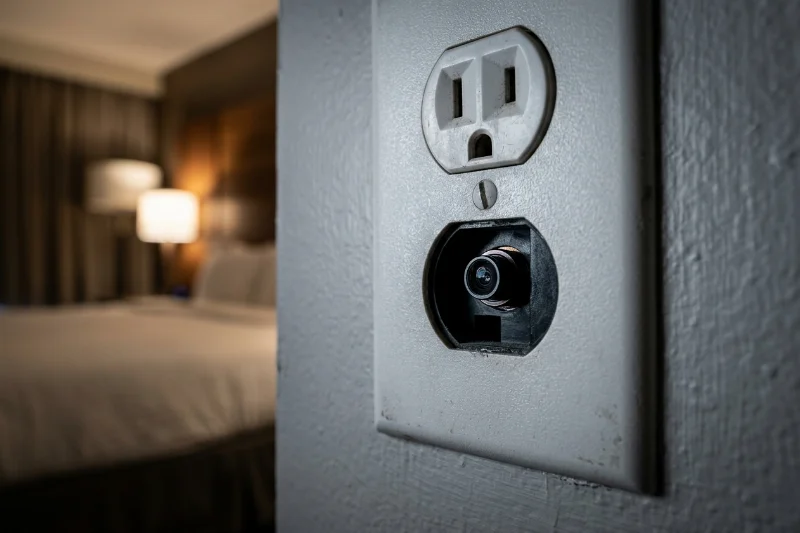
The discovery occurred during a routine stay at a mid-range hotel. While settling in, the couple noticed a peculiar reflection coming from a wall socket—a common hiding spot for modern surveillance equipment. Upon closer inspection, they found a pinhole camera meticulously hidden within the hardware, wired directly to the building’s electrical system and internet connection.
What made this case particularly egregious was the realization that the footage wasn’t just being recorded for later viewing; it was being streamed live. Investigations later revealed that the camera was linked to an underground platform where users paid for access to “real-life” footage from various hotel rooms. This monetization of privacy highlights a growing and dangerous black market for voyeuristic content in the digital age.
Legal and Ethical Consequences
Under Chinese law, the unauthorized filming of individuals in private spaces is a criminal offense, yet enforcement remains a significant challenge due to the sheer volume of low-cost surveillance technology available online. Following the couple’s report, local authorities launched an investigation into both the hotel’s management and the third parties involved in the streaming network. The incident sparked a massive debate on social media platforms like Weibo regarding the responsibility of hospitality providers to ensure guest safety.
Technological Vulnerabilities in Modern Hotels
The technology used in these breaches is becoming increasingly sophisticated and miniaturized. Pinhole cameras can now be smaller than a screw head, making them nearly invisible to the naked eye. These devices often utilize the hotel’s own Wi-Fi infrastructure to upload high-definition video in real-time, making detection difficult without specialized tools or a very keen eye for anomalies in the room’s decor or electronics.
Practical Safety Tips for Travelers
To protect themselves, travelers are encouraged to perform a physical sweep of their hotel rooms upon arrival. Experts suggest turning off all lights and using a smartphone camera to look for small, blinking infrared lights that are often invisible to the human eye. Particular attention should be paid to items facing the bed, such as alarm clocks, smoke detectors, television sets, and wall-mounted outlets.
Additionally, travelers can use specialized RF (Radio Frequency) detectors to scan for active wireless signals being emitted from unusual locations within the room. While many hotels are increasing their security protocols, the onus often falls on the guest to remain vigilant. Checking for loose wires or “dummy” devices that seem out of place is a critical step in securing one’s private space during a stay abroad.
The Future of Hospitality and Digital Privacy
As this incident illustrates, the intersection of technology and hospitality requires new standards of regulation and transparency. Moving forward, the industry must adopt more rigorous inspection routines to prevent third-party actors from compromising guest rooms. For travelers, the lesson is clear: while convenience and connectivity are hallmarks of modern travel, they should never come at the expense of fundamental privacy and safety.